

Registration | Locations | Travel Information | Accomodation | Schedule
Gänseliesel CC-BY-SA
Registration
We kindly ask you to register by scanning the QR code provided below or clicking the link:

Locations
We are excited to welcome you the first day (27 October) at:
Historic Observatory, Göttingen
Geismar Landstr. 11, 37083 Göttingen
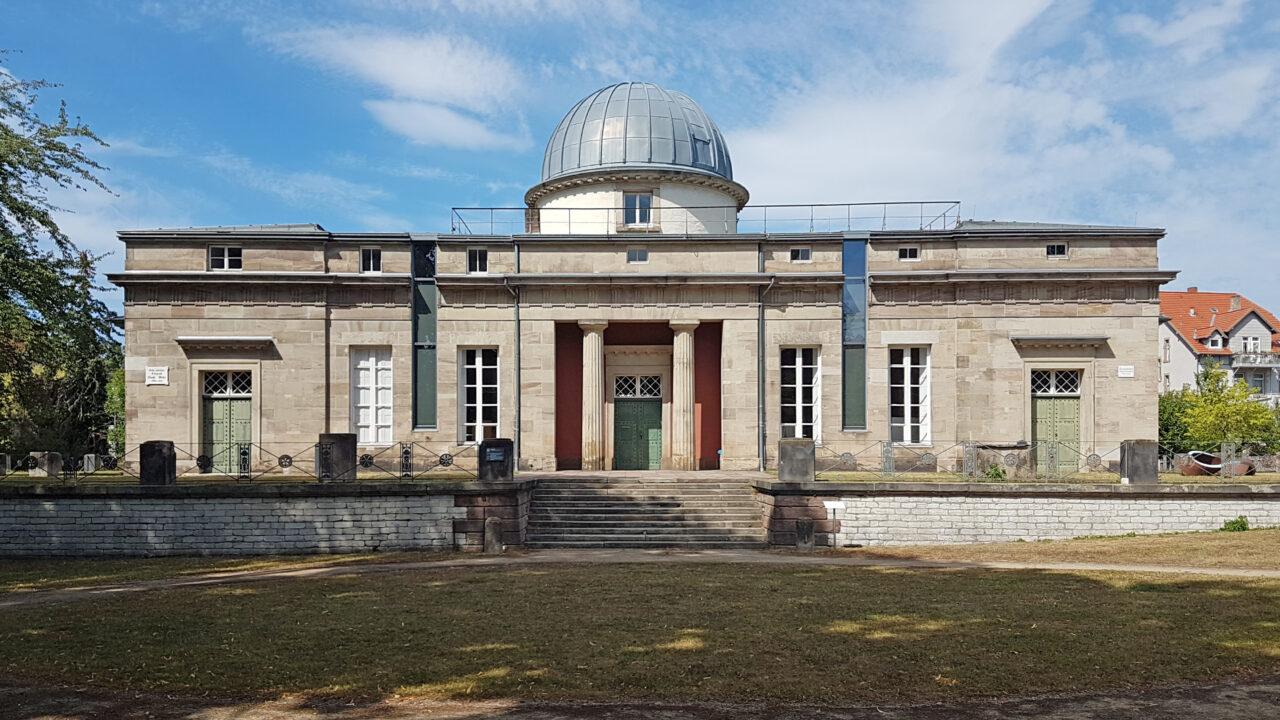
The following days (28 – 29 – 30 October) we will be here:
Convention Center at the Observatory, Göttingen
Geismar Landstr. 11b, 37083 Göttingen
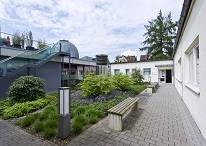
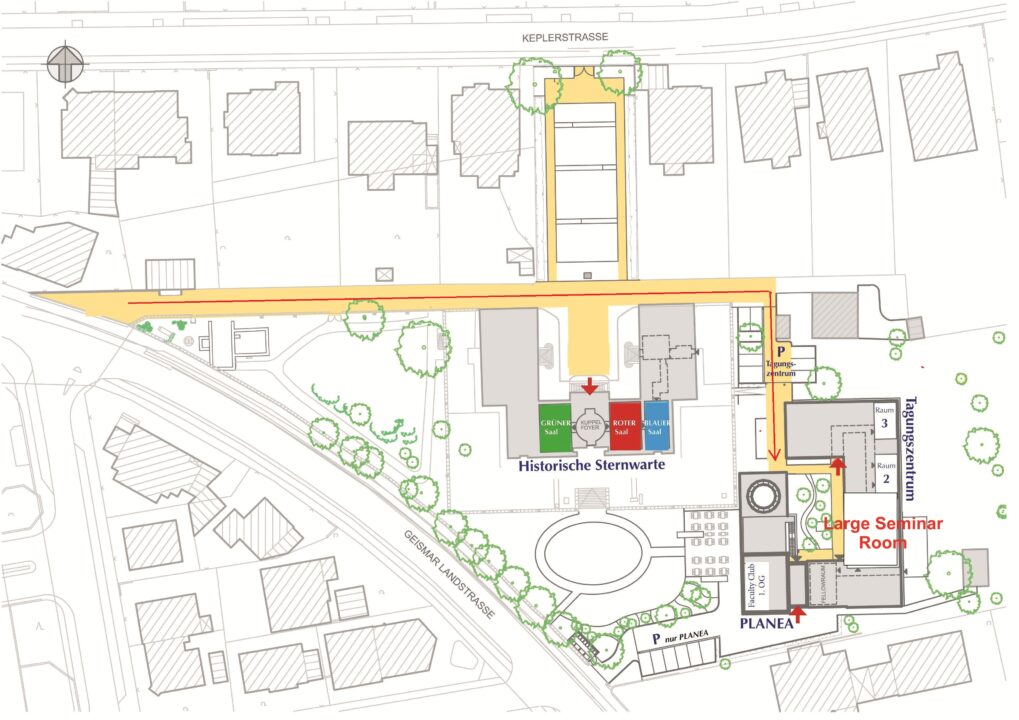
The Convention Center is located in a separate building next to the Historic Observatory
We will be in the Large Seminar Room
(click to enlarge)
Historic Observatory & Convention Centre Close-up view
Travel Information
All participants are encouraged to book their travel as early as possible to secure availability and reasonable prices.
* Travel costs must initially be covered by the participant and can be reimbursed from the central TRR 274 funds upon submission of the relevant receipts. Please note that only second-class train tickets and economy-class flights are eligible for reimbursement.
If you have any questions about the process or required documentation, please contact your local administrative office or the TRR 274 coordination team.
Travelling to Göttingen
From Frankfurt am Main
Göttingen is easily accessible from Frankfurt Airport by train. From Frankfurt Airport (Fernbahnhof), there are regular high-speed (ICE) connections to Göttingen, usually with one direct train per hour. The journey takes approximately 2 hours.
Alternatively, you can travel by car via the A5 and A7 motorways; the drive takes about 2–2.5 hours, depending on traffic.
From Munich
Travelling from Munich to Göttingen is convenient by train. Direct ICE connections run regularly from Munich Central Station (Hauptbahnhof), with a journey time of around 4 hours.
If you prefer to drive, Göttingen can be reached via the A9 and A7 motorways in approximately 4 to 5 hours, depending on traffic conditions.
Getting Around Göttingen
Göttingen is a compact and easy-to-navigate city. Most locations in the city center can be reached on foot within a short time, and walking is often the most convenient option. Alternatively, local buses connect the main parts of the city frequently and reliably.
From the Train Station to the City Center
Göttingen’s city center is only a short walk (approximately 5–10 minutes) from the main train station. Simply follow the signs toward the pedestrian zone (“Innenstadt”).
Reaching the Observatory
The Historical Observatory is located close to the city center and can be reached on foot in about 10–15 minutes from the train station. To reach the Historical Observatory (Sternwarte) from Göttingen train station, you can take either bus line 21 or 22. Get off at “Sternwarte” or a nearby stop such as “Theaterplatz” (depending on the exact route). Taxis are available at the train station.
Accomodation
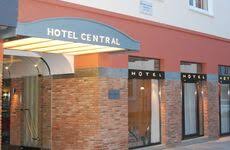
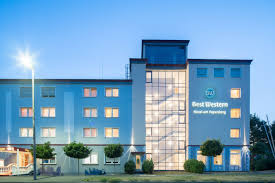
A room in one of the three above hotels has been reserved for all participants coming from outside Göttingen.
No separate booking is required.
If you have any special requirements or questions regarding your accommodation, please get in touch.
Schedule
Presentations: What you need to know
Presentation Time: Invited speakers will have 30 minutes to present, followed by 10 minutes for discussion (40 minutes total). The internal speakers will have 15 minutes fo their presentation and 5 minutes for discussion (20 minutes total)
There will be no poster session during the symposium.