

CD38 endows local antigen-specific Treg cells with stress resilience for control of compartmentalized CNS inflammation
Other (24)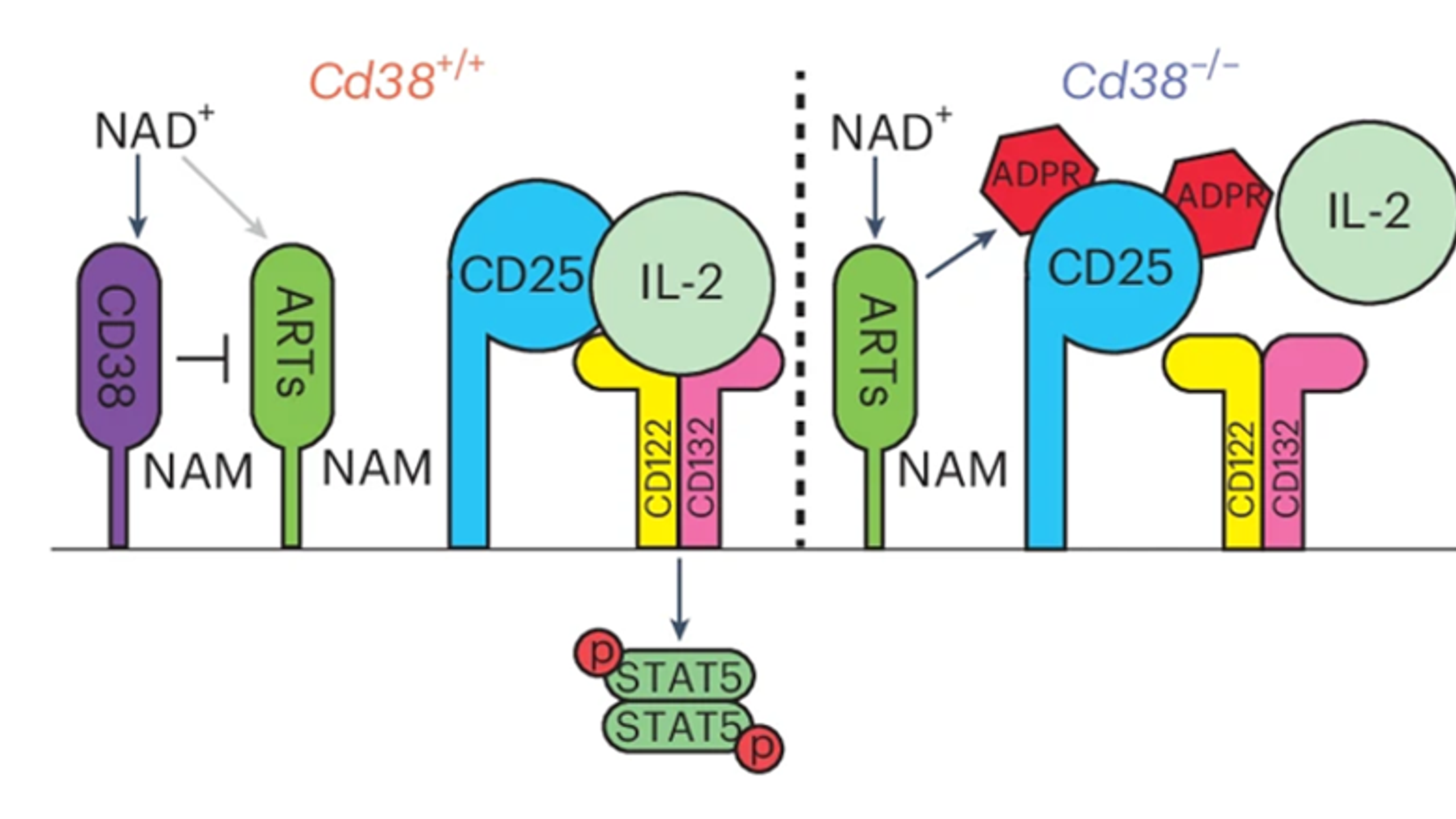
Background
Regulatory T (Treg) cells expressing the transcription factor Foxp3 are essential for maintaining immune tolerance and preventing autoimmunity. While their systemic immunosuppressive role is well established, less is understood about how Treg cells function within specific tissues after inflammation resolves. In autoimmune diseases affecting the central nervous system (CNS), such as multiple sclerosis, inflammation often becomes compartmentalized within the tissue. After acute inflammation subsides, the CNS environment remains metabolically stressful and relatively deficient in survival factors like interleukin-2 (IL-2), which is critical for Treg maintenance.
Aims
This study aimed to investigate how antigen-specific Treg cells persist and function within the CNS after autoimmune inflammation resolves, and to identify molecular mechanisms that enable their long-term survival in this challenging microenvironment.
Key Findings
- Persistence of tissue-resident Treg cells: After acute CNS inflammation (in a mouse model of experimental autoimmune encephalomyelitis, EAE), a population of antigen-specific Treg cells remained in the CNS long term. These cells were locally maintained and distinct from circulating Treg populations.
- Stress-resilient phenotype: CNS-resident Treg cells exhibited adaptations that allowed them to survive in an IL-2–limited, metabolically stressful environment. They maintained stable Foxp3 expression and suppressive function despite limited growth signals.
- Critical role of CD38: The enzyme CD38 was identified as a key regulator of Treg stress resilience. CD38 protected high-affinity IL-2 receptor signaling by preventing ADP-ribosylation of the IL-2 receptor. Without CD38, Treg cells showed impaired survival and function within the CNS.
- Local immune control: CD38-dependent Treg cells were essential for maintaining compartmentalized immune regulation within the CNS. Loss of CD38 compromised local immune homeostasis, increasing susceptibility to renewed inflammation.
Implications
- The findings demonstrate that immune tolerance is not solely maintained systemically but also relies on specialized tissue-adapted Treg populations.
- CD38, traditionally associated with NAD metabolism, has a previously underappreciated role in protecting cytokine receptor signaling and immune regulation.
- Understanding how Treg cells persist in the CNS could inform therapeutic strategies for diseases such as multiple sclerosis, where chronic, compartmentalized inflammation occurs.
- Modulating CD38 pathways may offer a strategy to enhance tissue-resident Treg stability and improve long-term control of autoimmune inflammation.
Conclusion
This study demonstrates that antigen-specific Treg cells can persist long-term within the CNS after autoimmune inflammation resolves. Their survival and function in this stressful, IL-2–limited environment depend on CD38, which safeguards IL-2 receptor signaling and enables stress resilience. These findings reveal an important layer of tissue-specific immune regulation and identify CD38 as a critical molecular mechanism supporting long-term immune tolerance in inflamed tissues.
📖 Full text for further details: Nature Immunology
TRR 274 Project leaders contributing to this project: Thomas Korn (A01).